AI Automotive Photography: Prompt Formulas for Showroom-Quality Car Renders
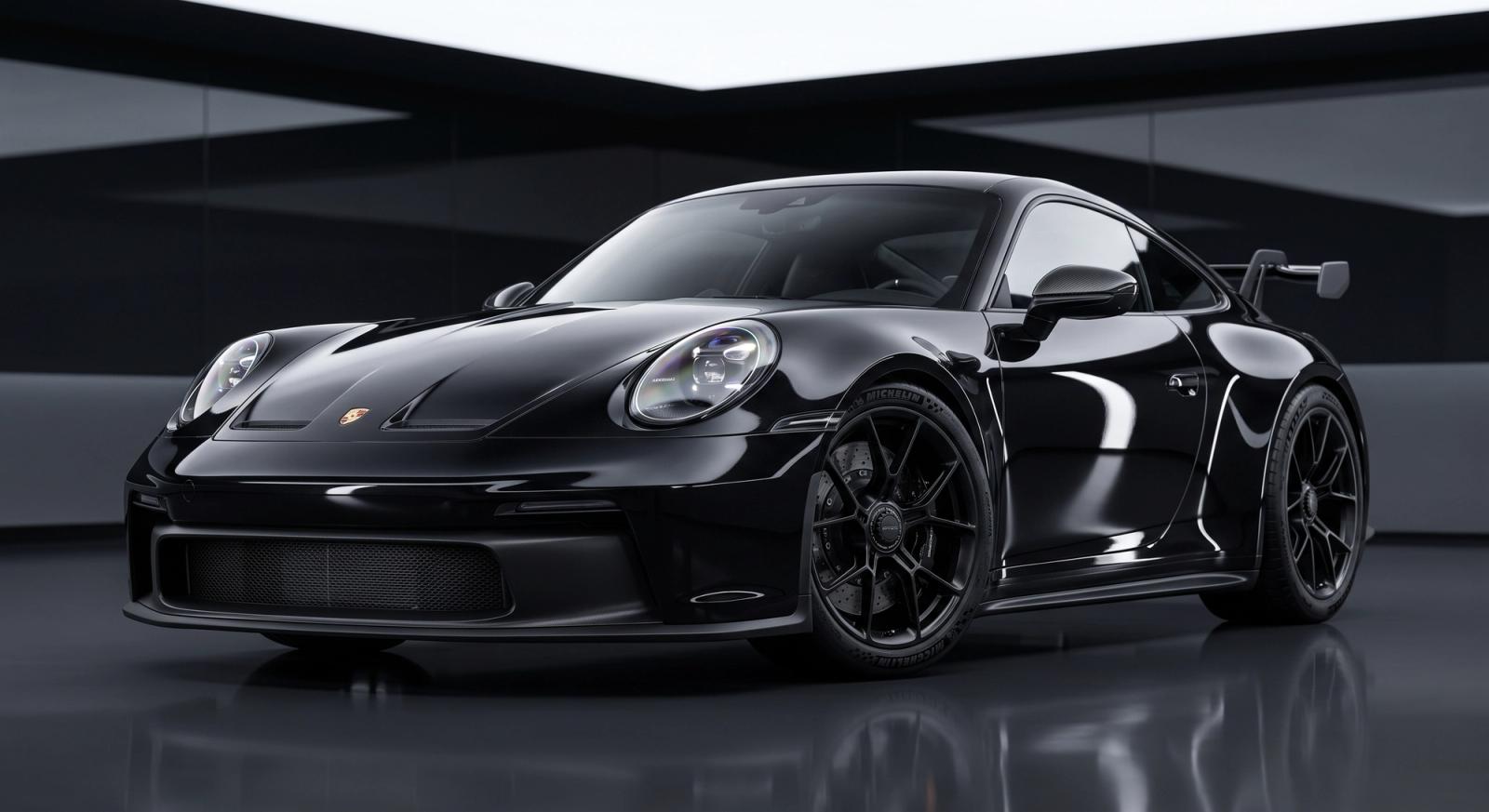
Cars are reflective, complex, moving objects, which makes them one of the hardest subjects to render believably. The tell is almost always the paint: real automotive paint has depth, a clear coat that catches and bends light, and reflections of its actual environment. Flat, matte-looking paint with no environmental reflection is the fastest way to signal 'render' instead of 'shot.' Get the paint physics right and everything else follows.
Paint Is a Reflection, Not a Color
Don't just name a color, describe how it behaves. 'Deep pearlescent midnight blue with a glossy clear coat, reflecting the surrounding environment' tells the model the paint is a mirror-like surface, not a flat fill. Studio and showroom shots specifically benefit from mentioning a reflection of softbox strips or an environment along the body panels, that's the classic automotive lighting signature.
The Showroom Car Formula
Lead with the vehicle and angle, then paint and reflection behavior, then the camera and lighting rig. A three-quarter front angle is the most flattering and commercially standard framing.
Showroom Car Render: commercial automotive photograph of a [make/model/year] in [color] with a glossy clear coat reflecting soft environmental light, three-quarter front angle, shot on a 35mm lens at f/8 for full sharpness, wraparound studio softbox lighting with visible strip reflections along the body panels, dark reflective showroom floor with subtle mirror reflection, clean minimal background, dramatic low-angle hero composition, ultra-detailed, high-end automotive advertising
'Visible strip reflections along the body panels' is the phrase that sells the shoot, it's the exact lighting artifact real studio photographers chase and light against.
Action Shots and Implied Motion
For lifestyle and action automotive content, imply speed the same way you would for an aerial shot: 'motion-blurred background, sharp static subject, low camera angle emphasizing speed.' Keep the car itself crisp while the environment streaks, that contrast is what sells velocity in a still frame.
- Describe paint as a reflective surface, not a flat color: name the clear coat and what it reflects.
- Add 'visible strip reflections along body panels' for authentic studio lighting.
- Use a three-quarter front angle for standard commercial framing, or a low hero angle for drama.
- For action shots, keep the car sharp and blur only the background to imply speed.
- Add a reflective showroom floor for a premium, grounded studio feel.
Automotive realism comes down to treating paint as optics and lighting the way a real studio rig would. Build the showroom formula into Manus, swap the make, model, and color, and generate a full commercial set without booking a single studio hour.