Next-Gen Apparel Commercials: Photorealistic Textures and Fabric Grids
The fastest way to spot an amateur AI fashion image is the fabric. Silk that doesn't catch light, denim with no weave, knitwear that looks painted on, these tells instantly break the spell. Campaign-grade apparel comes from treating fabric as the hero subject and describing it with the precision of a textile technologist. This guide covers the texture vocabulary and the fabric-grid technique that produce commercials clients actually pay for.
Describe Fabric Like a Technologist
Every textile has weight, weave, and finish, and naming all three is what triggers realism. 'A shirt' gives the model nothing; 'a heavyweight brushed-cotton flannel with a soft matte nap' tells it exactly how light should behave on the surface. Match the finish word to reality: silk is specular and liquid, wool is matte and dimensional, leather has grain and soft sheen, denim has a visible twill weave and worn highlights.
The Fabric-Grid Technique
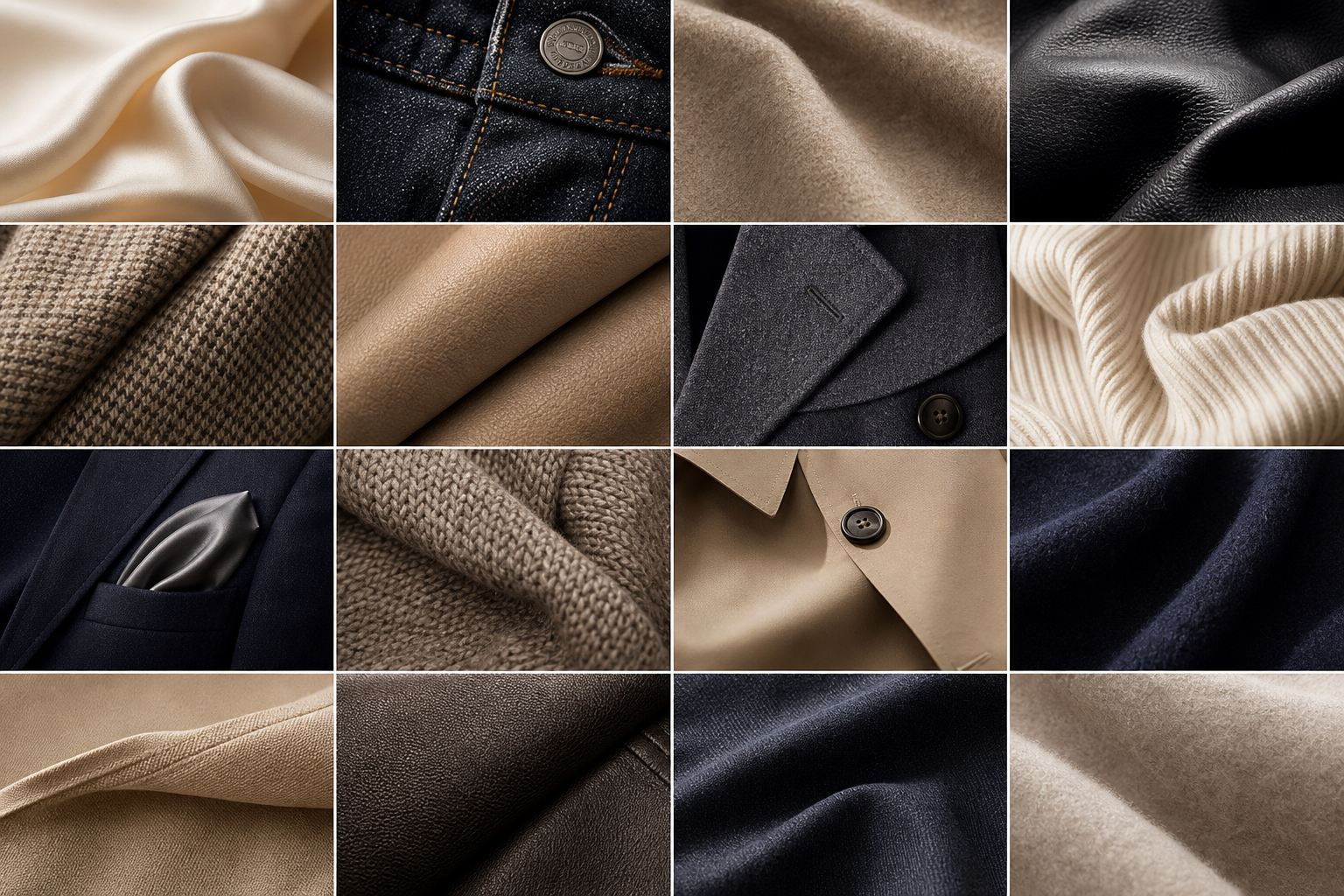
For lookbooks and brand decks, a texture grid is gold: a single composition showing four to six fabric close-ups under identical lighting. It proves material range and reads as premium art direction. The trick is locking the lighting and camera language so every cell feels like one cohesive shoot.
Fabric Texture Grid: editorial fashion still life, a clean grid of [4-6] apparel fabric close-ups — [silk charmeuse, raw selvedge denim, brushed wool, soft nappa leather] — macro detail showing weave, grain and natural drape, identical soft directional studio light at 45 degrees across all cells, neutral beige and charcoal palette, high-end commercial product photography, sharp focus, no grain
Keep the lighting clause identical for every fabric so the grid looks intentional. Vary only the textile, never the light, or the composition fragments.
From Swatch to Commercial
Once your fabric language is dialed, port it into full garment shots. The same texture descriptors that made a swatch believable will make a worn garment believable. Add a 100mm lens to compress the backdrop and flatter proportions, and a reflector so dark fabrics keep shadow detail instead of collapsing into a silhouette.
- Name weight + weave + finish for every fabric (e.g. heavyweight brushed cotton, matte nap).
- Lock one lighting clause across a grid so all cells read as one shoot.
- Match the finish word to physics: silk specular, wool matte, leather grained.
- Use a 100mm lens on garment shots to compress the scene and flatter cuts.
- Add a fill reflector so dark textiles retain shadow detail and texture.
Fabric realism is a vocabulary, not a filter. Build a texture grid to prove your range, then carry the same material language into garment commercials. Open Manus, run the grid formula above, and iterate one textile at a time until every fabric looks touchable.